
From the Sensex pack, Infosys, Tata Motors, UltraTech Cement, HDFC Bank, NTPC, IndusInd Bank, Larsen & Toubro, HCL Technologies, Power Grid, Maruti, HDFC and Tata Steel were the major laggards. Kotak Mahindra Bank, Asian Paints, Nestle, Titan, State Bank of India and Reliance Industries were the gainers.

Private life insurers experienced reasonable growth in the July-September quarter (second quarter, or Q2) of 2023-24 (FY24), and the October data is also encouraging. The individual weighted received premium (WRP) for private players grew by 19.8 per cent year-on-year (Y-o-Y) in October. However, Life Insurance Corporation (LIC) of India had slower growth, pulling the industry growth rate down to 13 per cent Y-o-Y.
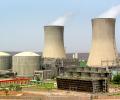
'Chinese are going bang, bang, bang building 30-35 reactors.' 'We should announce a programme of 50 new reactors and show that we mean business on the ground and not just announcements.'

A lot depends upon the crucial decision-making skills of the management. If you have any doubts about the management then you always have the choice of selling your shares or not buying stocks of those companies at all.

Investors' wealth eroded by Rs 7.59 lakh crore on Monday as the equity market took a heavy drubbing amid escalating tensions in the Middle East. The 30-share BSE Sensex plunged 825.74 points or 1.26 per cent to settle at 64,571.88 points. During the day, the index plummeted 894.94 points or 1.36 per cent to 64,502.68 points.

From the Sensex pack, Bajaj Finserv, HDFC Bank, Tata Motors, HCL Technologies, Tata Consultancy Services, Axis Bank, Infosys, IndusInd Bank, Tech Mahindra and Maruti were the major laggards. NTPC, Power Grid, Mahindra & Mahindra, JSW Steel, Bajaj Finance, ITC and Reliance Industries were among the gainers.

From the Sensex pack, NTPC jumped nearly 4 per cent after the company posted over 23 per cent rise in consolidated net profit in the April-June quarter of 2023-24. Power Grid, Tech Mahindra, Tata Steel, Tata Consultancy Services, Wipro, Maruti and JSW Steel were among the other major gainers.

If Pitroda's blunder cost him his office, what should the BJP's unrepentant attitude cost it?, asks Shyam G Menon.
From the Sensex basket, Tata Motors, State Bank of India, Tata Steel, Power Grid, NTPC, Bajaj Finserv, Bajaj Finance and Asian Paints were the major laggards.

From the Sensex pack, Mahindra & Mahindra emerged as the biggest gainer, climbing nearly 5 per cent. Power Grid, Tata Motors, Reliance Industries, NTPC, Axis Bank, Nestle, Kotak Mahindra Bank, Asian Paints and Wipro were among the other major gainers. Maruti, HCL Technologies, Bajaj Finance, IndusInd Bank, Infosys and Tata Steel were among the laggards.

Aditya Birla Group has announced its foray into the branded jewellery space with an investment of around Rs 5,000 crore and will battle it out with Titan's Tanishq and Reliance Industries- Reliance Jewel. The business will be housed in a new venture, "Novel Jewel", and will open large-format exclusive stores across the country with its in-house jewellery brands, the company said in its release. "The new venture will seek to transform customer experience by creating an aspirational national brand with unique designs and a strong regional flavour.

After years of losing money on two of the group's biggest bets - global steel business and domestic passenger cars - there are strong signs of a revival in both businesses.

'If you are a strong-minded, opinionated woman, scars are inevitable.'

If Tesla comes in, India's position as a manufacturing hub will rise many notches, as it will become only the second country, after China, to have both Apple as well as Tesla.
All the global transitions are working in India's favour, giving it the potential to become a force in today's uncertain world, but one of the country's biggest challenges is inclusive growth, Tata Sons chairman N Chandrasekaran said on Monday. In his address at the JRD Tata Oration, the head of the Tata group also asserted that Artificial Intelligence (AI) is here to stay and it will be beneficial if India prepares for it. Post the cold war era of relative stability and prosperity, the world appears to have given way to unpredictable conflicts and economic uncertainty, he said, adding that the pandemic resulted in supply chain shocks of gigantic proportion.
ITC was the biggest loser from the Sensex pack, sliding 2.04 per cent, followed by Power Grid, Reliance Industries, Larsen & Toubro, Nestle, Kotak Mahindra Bank, Bajaj Finance and JSW Steel. On the other hand, Titan, State Bank of India, Bajaj Finserv, Axis Bank, Tata Steel, Sun Pharma, Tech Mahindra and Bharti Airtel were the gainers.
 © 2026 Rediff.com - Advertise with us - Disclaimer - Privacy Policy - Sitemap - Feedback - About us - Terms of use - Grievances